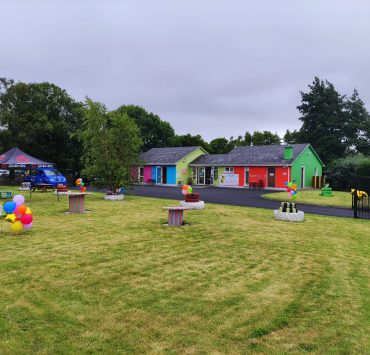
Early Years Support Centre – Riding a Bike



Q. Who Might Need Occupational Therapy?
A. OT can help Children & Adolescents who have:
· Birth Injury
· Congenital Disorder
· Sensory Processing
· Learning Difficulties
· Autism
· ADHD
· Mental Health Disorders
· Behavioural Issues
· Spinal Injury
· Brain Injury
· Cancer
· Broken bones
· Orthopaedic injuries
· Developmental delays
· Post-surgical conditions
· Burns
· Spina Bifida
· Traumatic
· Amputations
· Cerebral Palsy,
· Multiple sclerosis,
· Chronic illnesses.
Q. How Can Occupational Therapy help my child?
A. Paediatric OT’s helps Children’s to play, improves their school performance, and aids their daily activities. It also boosts their self-esteem and sense of accomplishment.
With OT, Children can:
· Develop fine motor skills so that your child can grasp and release toys and develop good handwriting or computer skills.
· Improve hand-eye coordination so your child can play and do the required school skills such as bat a ball and copy from a blackboard.
· Master basic life skills such as bathing, getting dressed, brushing teeth, and self-feeding.
· Learn positive behaviours and social skills by practicing how they manage frustration and anger.
· Make recommendations to get special equipment to help build their independence. These may include wheelchairs, splints, bathing equipment, dressing devices, and communication aids.
Riding a Bike
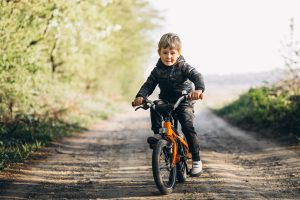
· Maintaining an upright posture (postural control, core strength)
· Motor planning (pedalling, turning handlebars, stepping back to brake, pulling the brakes on handlebars while cycling)
· Bi-Lateral Coordination (pedalling forwards coordinating both sides of the body together)
· Pedalling (leg strength to turn pedals, taking feet off pedals when stopping bike, pedalling fast enough, getting 2 feet on pedals, and getting started)
· Balance (this can be an issue due to decreased core strength or vestibular processing difficulties)
· Visual Perception (spatial relations, judging distances etc while moving fast)
· Cycling (Putting all the steps of bike riding together and performing them at once)
The below tips will help you to support a child to have fun and be a safe cyclist; Strategies to support the child in developing this skill.
· Set the seat height correctly; their feet should be flat on the ground when seated.
· Remove Stabilisers; it is strongly recommended that you start your child off with a balance bike or remove the pedals from the bike so that your child can learn to balance by pushing their feet
against the ground.
· Before your child learns to cycle, teach them to walk along in a straight line whilst holding onto the handle- bars, with the bike on their right-hand side. When they can do this, teach them to use


both brakes to stop the bike suddenly on command.
· Once the pedals are back on. Adding straps to the pedals to keep a child’s feet in place may be helpful. If leg strength is an issue some activities you can do at home are jumping games (obstacle courses), hopscotch, jump on 1 foot, or have your child kick a large therapy ball when laying on his/her back.
· The next piece of the puzzle to be examined is balance and upright posture. If your child cannot hold themselves upright and immediately slumps while seated on the bike seat, core strengthening activities are essential e.g., animal walks, wheelbarrow walks, obstacle course
· Teach your child to kick the pedals into position ready for push off, with their preferred foot just forward of the highest position to get good leverage. The effort of pushing the pedals round, especially for push-off, will make balancing much harder. Keep the bike in a low gear. A tarmac path will give much less resistance than grass.
· You will need to hold the back of the seat to give some help with balance at first as the child gets used to pedalling whilst balancing. Two adults, one each side, is best. If your child really
struggles with balance then you need to work on their balance skills with activities like walk on a balance beam while reading an alphabet chart, stand on a shaky surface (balance board, BOSU)
and dribble a ball/play catch, complete an obstacle course, and any other multi component activity you can think of!
· Again, repeat the same stages of learning as when scooting – first learning to go in straight lines and to use the brakes. To gain balance, longer stretches of space are helpful.
· Practise and patience are the key to success. Bike riding is an achievable skill for everyone!
Call us on 086 138 2126 if you wish to speak to an Occupational Therapist
Oakview Village, Tralee, Co. Kerry.
066 712 7400 / 086 138 2126