CERTAINTY REQUIRED FOR 1800 YOUNG PEOPLE WITH DISABILITIES ON THE FUTURE OF THE ‘ABILITY’ PROGRAMME


Organisations delivering the ‘Ability’ Programme across the Country have called on the Government to provide certainty to the 1800 young participants with disabilities, that the Programme will continue post June 2021.
The Ability Programme provides funding to 27 local, regional, and national projects that focus on bringing young people with disabilities between the ages of 15 and 29 closer to the labour market. The programme targets young people who are not currently work ready using a range of person-centred supports. This type of work assists young people to identify and follow progression routes based on both their potential and their needs. As a result, the programme promotes positive pathways into education, training, and employment for participants.
There are 27 organisations delivering this pilot programme which is due to finish in June 2021. There are over 1800 participants, 27 providers and 90 employees involved in the Ability Programme projects. Currently, these 27 organisations are concerned that the services they provide to 1800 young people with disabilities will not be available in the second half of next year.
An Ability participant said “I hadn’t done anything since leaving school, and the longer this went on, the more isolated I was becoming, I was struggling to come out of my bedroom. The first few meetings with the Ability Programme took place in my home, gradually I came out of myself and met them in the Centre. This was a big thing for me, but it helped me to feel comfortable around people”.
“Witnessing the positive change in my son over the past year on the Kildare Ability programme has improved my own well-being enormously. Since leaving school, he has had no structured programme to attend and my son was spending increasing time in the house and not getting out to meet friends. It has truly been life changing for both of us. “ (Parent)
The 27 Ability organisations have now called on the Government to ensure that the learnings, collaborations, and developments gained through investment in the Ability Programme should not be lost and that a Programme for Government commitment to expand the Programme be delivered upon.
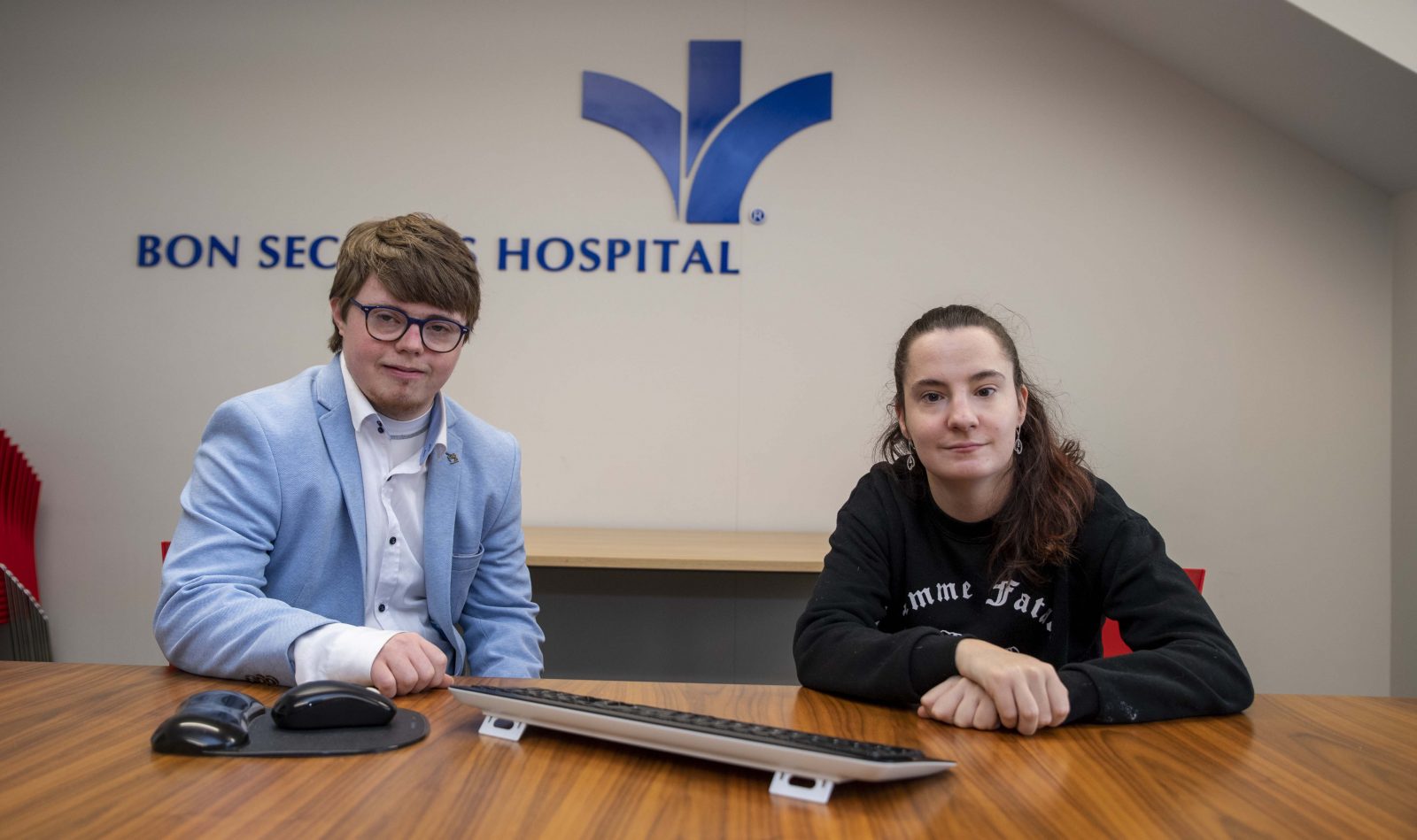
Participants on the Inspired Ability Programme at their placement at the Bons Secour Hospital, Tralee.
The Ability Programme provides funding to 27 local, regional, and national projects in the Republic of Ireland that focus on bringing young people with disabilities between the ages of 15 and 29 closer to the labour market.
The programme targets young people who are not currently work ready using a range of person-centred supports. This type of work assists young people to identify and follow progression routes based on both their potential and their needs. As a result, the programme promotes positive pathways into education, training, and employment for participants.
Ability has an overall budget of up to €16m from 2018 to 2021, is co-financed by the European Social Fund (ESF) and the Department of Social Protection (DSP), and administered by Pobal.
The objectives of Ability are to:
• assist young people with disabilities to develop the confidence and independence required to participate in education, training, and employment
• support young people with disabilities who are not in education, employment or training to access and participate in education, training, and employment
• build the capacity of mainstream employment services, education, and training providers to support the progression of young people with disabilities

• build the capacity of employers to recruit and retain young people with disabilities within their workforce
The current Ability Programme is funded to the 1st July 2021.
Further details on the Ability Programme are available on the Gov.ie website
Census 2016 figures show that the employment rate for people with disabilities of working age is 36.5% compared to a rate of 72.8% for people of working age without a disability.
Disability inclusion is an essential condition to upholding human rights, sustainable development, and peace and security. It is also central to the promise of the 2030 Agenda for Sustainable Development to leave no one behind. The commitment to realising the rights of persons with disabilities is not only a matter of justice; it is an investment in a common future.
The global crisis of COVID-19 is deepening pre-existing inequalities, exposing the extent of exclusion, and highlighting that work on disability inclusion is imperative. People with disabilities—one billion people— are one of the most excluded groups in our society and are among the hardest hit in this crisis in terms of fatalities. Even under normal circumstances, persons with disabilities are less likely to access health care, education, employment and to participate in the community. An integrated approach is required to ensure that persons with disabilities are not left behind.
Disability inclusion will result in a COVID19 response and recovery that better serves everyone, more fully suppressing the virus, as well as building back better. It will provide for more agile systems capable of responding to complex situations, reaching the furthest behind first.